What Questions Should Small Businesses Ask Before Choosing a Digital Agency?

Picking a digital marketing agency for small business isn’t just another item on your to-do list; it’s a pivotal decision that can genuinely shape your company’s future. Think of it less like hiring a vendor and more like bringing on a strategic partner. This isn’t a one-and-done transaction; it’s an ongoing relationship that, when done right, profoundly impacts your long-term growth, brand visibility, and bottom line. Choose wisely, and you’ll unlock new opportunities. Choose poorly, and you might just waste precious time and resources
So, how do you navigate the sea of agencies out there to find the right fit? It boils down to asking the smart questions, the ones that dig deeper than surface-level promises. This isn’t about finding the flashiest presentation; it’s about uncovering genuine expertise, alignment, and a shared vision for success. Consider this your essential checklist for smart buyer intent, ensuring you land an agency that truly understands your unique challenges and ambitions.
Alignment Questions
Before you even talk tactics, you need to gauge if an agency truly “gets” you. It’s not enough for them to be good at marketing; they need to be good at marketing *for your business*. Start by probing their understanding of your world. Ask them, “How do you approach strategy for businesses like mine? What specific challenges do you see for companies in my industry, and how do you typically overcome them?” You want to hear more than generic answers. Look for insights that show they’ve done their homework or have relevant experience.
A top digital marketing agency won’t just parrot back your industry buzzwords; they’ll offer fresh perspectives and demonstrate an understanding of your competitive landscape. Next, get personal. “Who will actually be working on my account, and what’s their experience level?” You’re not hiring a faceless corporation; you’re hiring a team. Knowing who your direct contacts will be and their background is crucial. Will it be a seasoned strategist or a revolving door of junior associates? Transparency here speaks volumes about their commitment to your success.
Communication is key in any partnership, so don’t shy away from asking, “What’s your communication style and frequency? How will we stay updated on progress and discuss adjustments?” You need a clear understanding of reporting schedules, preferred channels (email, calls, project management tools), and how accessible your team will be. Nobody wants to be left in the dark, especially when their marketing budget is on the line. Finally, probe their philosophy: “What’s your approach to a client relationship? Do you see yourselves as a vendor or a partner?” The answer here can tell you a lot. A true partner will be proactive, challenge your assumptions when necessary, and invest in your success as if it were their own. They won’t just execute tasks; they’ll strategize with you.
KPIs & reporting
Defining success upfront is non-negotiable. Without clear metrics, you’re just throwing darts in the dark. This is where the rubber meets the road, transforming marketing efforts into measurable business outcomes. You absolutely need to ask, “How do you define success for a campaign, and what Key Performance Indicators (KPIs) do you track?” Beware of agencies that focus solely on vanity metrics like impressions or clicks without tying them back to tangible business goals like leads, conversions, or revenue. As HubSpot often emphasizes, a data-driven approach means focusing on metrics that truly impact your bottom line.
They should be able to articulate a clear path from their activities to your desired business results. Then, delve into the details of accountability: “What do your reports look like, and how often will I receive them? Will they be easy to understand, or will I need a marketing degree to decipher them?” Good reporting isn’t just about data dumps; it’s about providing actionable insights and clear explanations.
You should expect regular, comprehensive, yet digestible reports that highlight progress, explain challenges, and outline next steps. And don’t hesitate to ask for proof: “Can you provide examples of past results (anonymized, of course) for clients similar to mine?” While every business is unique, seeing how they’ve delivered for others can offer valuable insight into their capabilities and approach. It’s not about guaranteeing identical results, but about demonstrating a track record of effective strategies.
Budget Reality Check
Let’s be real: money matters. You need to ensure the investment you’re making aligns with your expectations and provides genuine value. This section is all about getting transparent answers on costs and potential returns. Start with the basics: “How do you structure your pricing, and what exactly is included in your fees?” Digital marketing costs can vary wildly, from retainer models to performance-based pricing. You need a crystal-clear breakdown of what you’re paying for – services, ad spend management fees, software costs, etc. No one likes hidden surprises, so demand full transparency upfront.
A good digital marketing agency for small business will be upfront about all potential costs. Then, shift to value: “What’s the typical ROI you aim for with clients in my sector, and how do you help achieve it?” While no agency can guarantee specific ROI (and run if they do!), they should be able to discuss realistic expectations based on their experience and your budget. This conversation isn’t just about numbers; it’s about their strategy for generating that return. Think with Google often highlights the importance of understanding the full customer journey to accurately measure ROI, so look for an agency that thinks holistically.
Consider flexibility: “What happens if we need to adjust the scope of work or scale up/down our efforts? How flexible are your contracts?” Business environments change, and your marketing needs might evolve. Understanding how an agency handles these shifts – whether it’s easy to pivot campaigns or adjust budgets – is crucial. You don’t want to be locked into rigid terms that don’t serve your dynamic business. Finally, clarify the commitment: “Are there any long-term commitments or specific exit clauses I should be aware of?” Knowing the minimum contract length, cancellation policies, and what happens to your assets (like ad accounts or creative materials) if you part ways is vital. A reputable agency will have clear, fair terms that protect both parties.
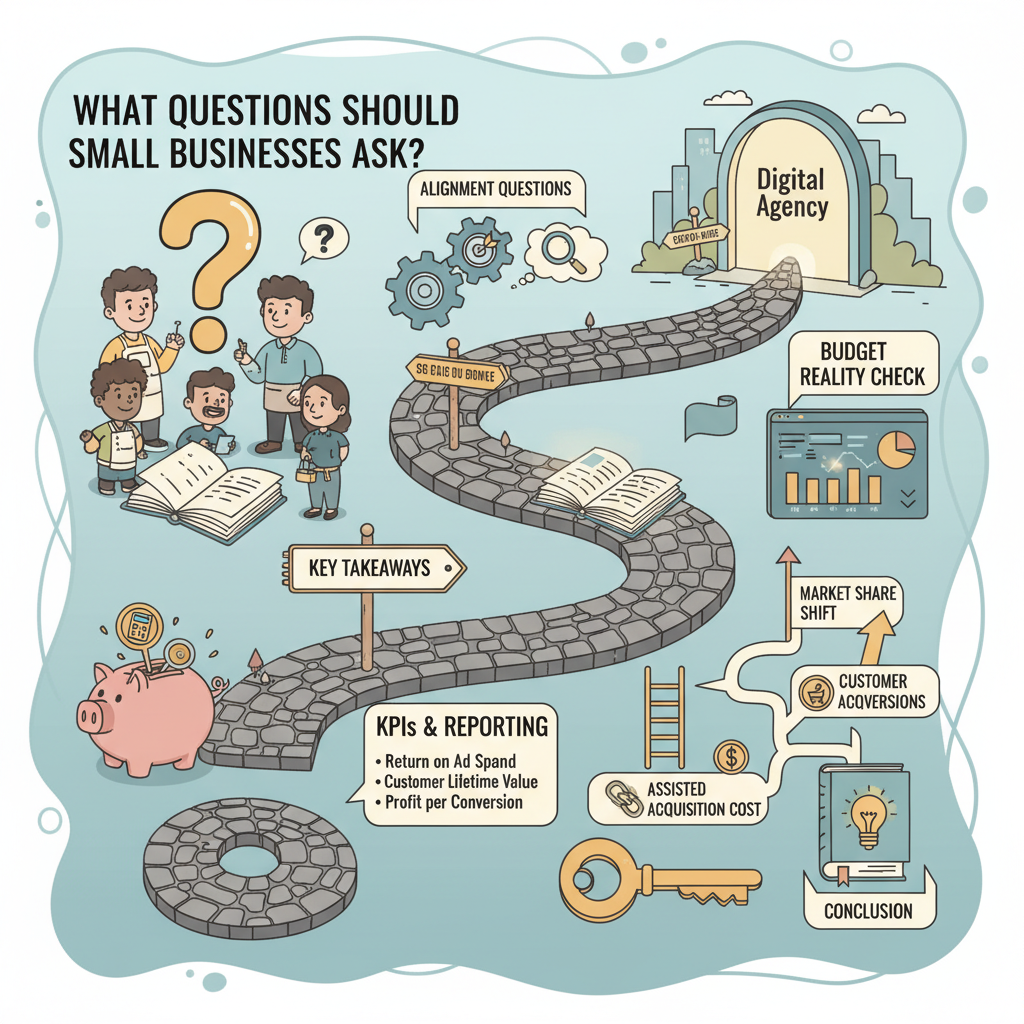
Key Takeaways
- Choosing a digital agency is a strategic partnership, not just a service purchase; look for long-term alignment.
- Prioritize agencies that demonstrate a deep understanding of your specific industry and business challenges.
- Demand clear communication channels, detailed reporting, and a focus on measurable KPIs that tie directly to your business goals.
- Ensure complete transparency regarding pricing structures, included services, and potential ROI expectations.
- Understand contract flexibility, commitment periods, and exit clauses before signing any agreement.
Conclusion
Selecting the right digital marketing agency is an investment in your small business’s future. By arming yourself with these insightful questions, you’re not just interviewing potential vendors; you’re vetting future partners. Take your time, listen carefully to their answers, and trust your gut. A well-chosen agency won’t just run campaigns; they’ll become an extension of your team, dedicated to driving your growth and helping you navigate the ever-evolving digital landscape with confidence.